

Understanding the Model Context Protocol for AI IntegrationThe artificial intelligence landscape is changing rapidly, and at the heart of this transformation is the Model Context Protocol (MCP). Anthropic developed the this and open-sourced it in November 2024.
MCP is a standardized protocol that enables AI assistants to connect directly with various data sources, such as content repositories, business tools, and development environments. This integration enhances AI systems’ ability to retrieve relevant information and perform tasks more effectively.This groundbreaking framework is reshaping how businesses leverage AI by fundamentally altering the way AI systems connect with external data sources and tools.
What is the Model Context Protocol (MCP): Beyond Traditional APIsAt its core, the Model Context Protocol serves as a standardized framework that allows large language models (LLMs) to seamlessly interact with diverse data repositories. Unlike conventional integration methods that often create isolated AI systems, MCP establishes a uniform approach to context-sharing between models and applications.
Think of MCP as creating a universal language that enables AI assistants to communicate effectively with the external world. Rather than being confined to their training data, AI systems equipped with MCP can access real-time information, retrieve contextually relevant resources, and execute specific tools to provide more accurate, timely responses.
This revolutionary protocol marks a departure from the rigid, unidirectional approach of traditional APIs, which typically follow a simple request-response model. Instead, MCP facilitates a dynamic, bidirectional dialogue between AI models and data sources, enabling more contextually aware and interactive AI capabilities.
MCP’s Technical Architecture: Client-Server Model Explained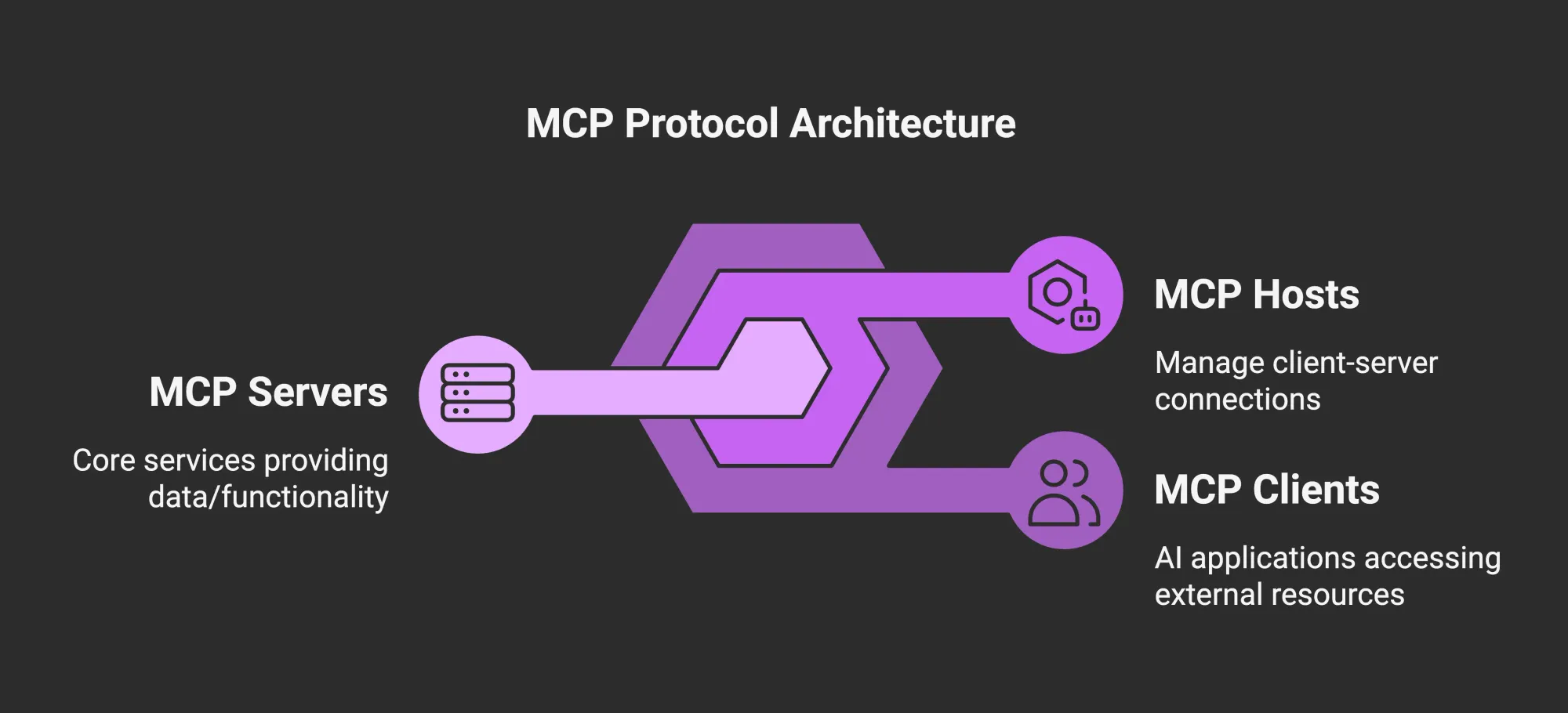 The technical architecture underpinning MCP revolves around a sophisticated client-server model. This framework consists of three primary components that work in harmonious coordination:
This architecture enables clear separation of concerns while maintaining robust security boundaries. Anthropic’s open-source approach to MCP has been instrumental in establishing this framework as a potential standard for AI integration, offering a blueprint for developers seeking to enhance their AI applications with external data connectivity.
The USB-C Moment for AI: How MCP Standardizes AI ConnectivityThe emergence of MCP represents what many industry observers are calling the “USB-C moment” for artificial intelligence. Just as USB-C unified the fragmented landscape of physical connectors, MCP aims to standardize how AI models connect with external resources, regardless of their origin or specific implementation details.
This standardization eliminates the need for custom integrations for each new data source or tool, dramatically reducing development complexity and time. Organizations no longer need to create bespoke connections for every AI model they deploy, instead benefiting from a plug-and-play approach to AI integration.
The implications of this standardization extend far beyond mere technical convenience. By providing a common framework for AI connectivity, MCP is fostering an ecosystem where innovations in one area can benefit the entire landscape, accelerating the pace of AI advancement across industries.
Core Components: Prompts, Resources, Tools, and SamplingMCP’s functionality is built upon four fundamental components that together create a comprehensive framework for AI-data interaction:
These components work in concert to create a robust ecosystem where AI models can extend their capabilities beyond what’s possible with static training data alone. By standardizing these elements, MCP enables a more dynamic and adaptable approach to AI development and deployment.
Real-World Business Transformation with MCPThe theoretical benefits of MCP are impressive, but what truly matters is its tangible impact on businesses and organizations. Early adopters are already reaping significant rewards from MCP implementation, demonstrating its potential to transform operations across diverse sectors.
 Quantifiable Benefits: Efficiency Gains and ROIOrganizations implementing MCP are reporting substantial efficiency improvements and return on investment. These gains manifest through several key mechanisms:
Practical implementation of MCP demonstrates how these benefits translate into measurable business outcomes, with organizations reporting faster turnaround times and higher-quality AI responses that deliver competitive advantages in the marketplace.
Case Studies: Early Adopters Leading the WayBlock (Formerly Square): Enhanced Internal SystemsBlock (formerly Square) stands as a notable early adopter of MCP, integrating the protocol into their internal systems to enhance AI capabilities across their organization. Simplifying AI integration with MCP has allowed Block to create more cohesive connections between their various data systems and AI applications.
The company has leveraged MCP to develop more effective internal tools, including enhanced customer support systems that can access and utilize contextually relevant information in real-time. This implementation has yielded significant improvements in response accuracy and resolution time, directly impacting customer satisfaction metrics.
Enterprise Implementation Success StoriesBeyond Block, numerous enterprises across different sectors are experiencing transformative results through MCP adoption. These organizations are finding particular value in MCP’s ability to break down data silos, enabling more comprehensive analysis and insight generation.
For instance, healthcare providers are using MCP to connect AI assistants with patient records and medical knowledge bases, improving diagnostic accuracy and treatment recommendations. Similarly, financial institutions are implementing MCP to enable AI systems to access market data and regulatory information, enhancing compliance and risk management processes.
Operational Impacts: From Decision Making to Cost ReductionThe operational impacts of MCP extend across virtually every aspect of business functioning, from high-level strategic decision-making to granular cost optimization:
These operational enhancements translate into tangible business outcomes, including faster time-to-market for new products and services, improved customer experiences, and more agile responses to changing market conditions.
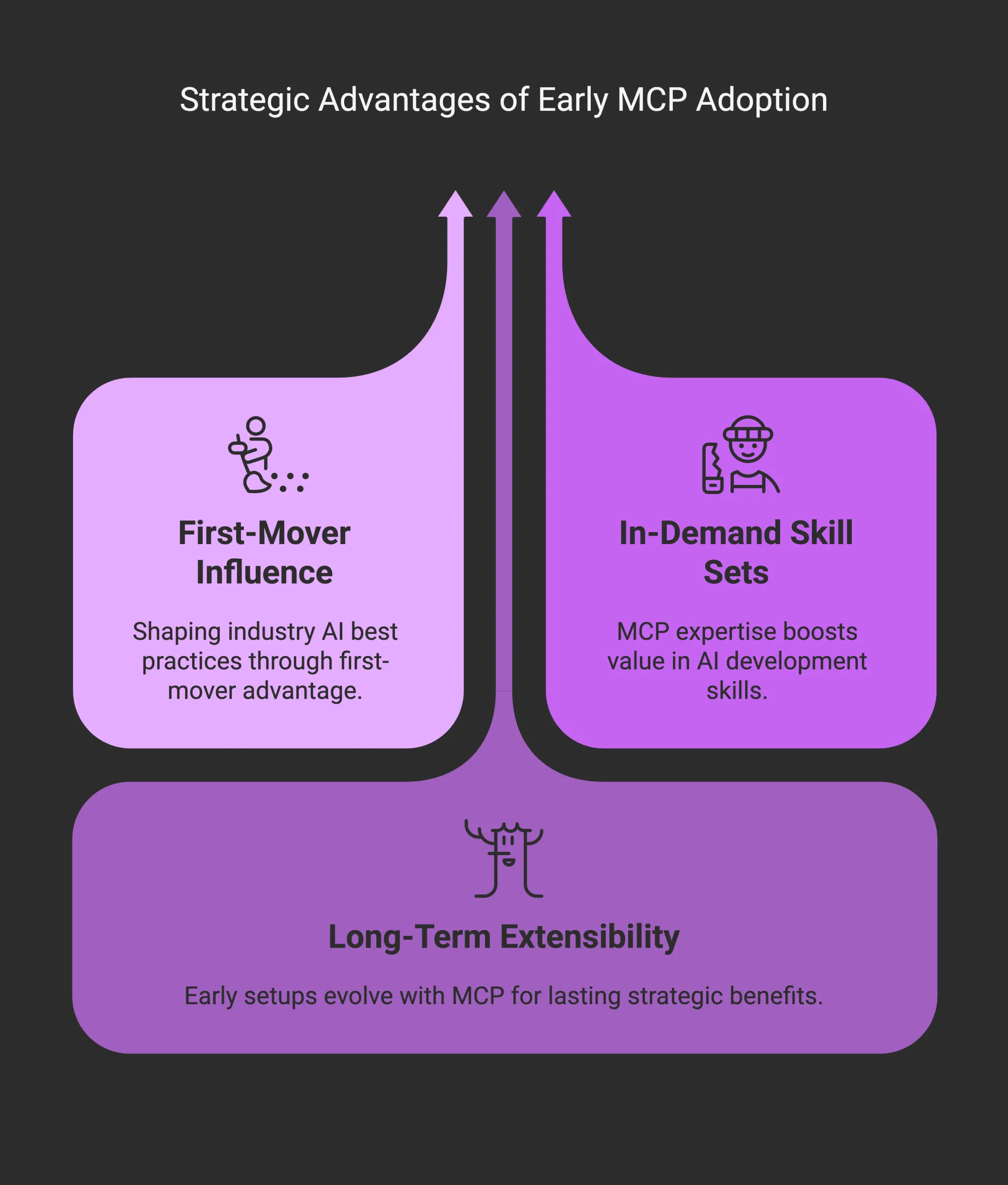
Competitive Advantages of Early MCP AdoptionOrganizations that embrace MCP ahead of their competitors stand to gain several strategic advantages. Enterprise transformation with MCP creates opportunities for differentiation through enhanced AI capabilities that competitors may struggle to match.
Early adopters benefit from the cumulative nature of MCP implementation, where each new integration builds upon existing architecture, creating an expanding network of connected systems. This network effect establishes an increasingly valuable ecosystem that becomes more difficult for competitors to replicate over time.
Moreover, organizations that master MCP implementation develop institutional knowledge and expertise that positions them as leaders in AI integration, potentially opening new revenue streams through consultancy or specialized services.
Technical Differences That Drive Business ValueThe business benefits of MCP stem directly from its technical innovations. Understanding these technical differentiators helps explain why MCP represents such a significant advancement over traditional integration methods.
MCP vs. Traditional APIs: Breaking Down the Technical AdvantagesTraditional APIs have long served as the standard method for system integration, but MCP offers several technical advantages that address fundamental limitations of API-based approaches:
MCP versus traditional API approaches shows how these technical differences translate into practical advantages, including more flexible and adaptive AI systems that can respond to changing conditions without requiring developer intervention.
Interoperability and Standardization BenefitsOne of MCP’s most significant contributions to the AI landscape is its emphasis on interoperability through standardization. This approach offers several key benefits:
These interoperability benefits directly impact business outcomes by reducing development overhead, accelerating implementation timelines, and enhancing the longevity of AI investments.
Real-Time, Two-Way Communication CapabilitiesMCP’s real-time, bidirectional communication capabilities represent a fundamental shift in how AI systems interact with external resources. This model enables:
This dynamic communication model creates more responsive and flexible AI systems that can adapt to complex, changing requirements without requiring constant reconfiguration.
Dynamic Data Querying and Context-Aware DialoguePerhaps the most transformative technical aspect of MCP is its support for dynamic data querying and context-aware dialogue. This capability:
These capabilities dramatically enhance the utility and effectiveness of AI systems, particularly for complex tasks requiring nuanced understanding and adaptive responses.
Implementation Challenges and SolutionsDespite its transformative potential, implementing MCP is not without challenges. Understanding these obstacles—and proven strategies to overcome them—is essential for organizations considering MCP adoption.
Common Technical Barriers to MCP AdoptionOrganizations looking to implement MCP often encounter several technical hurdles that can impede progress:
These technical barriers, while substantial, can be addressed through thoughtful planning and implementation strategies that account for existing infrastructure limitations.
Integration Complexity and Organizational ResistanceBeyond purely technical challenges, organizations often face integration complexity and resistance to change:
Addressing these organizational challenges requires strong leadership commitment, clear communication of MCP’s benefits, and inclusive implementation approaches that incorporate feedback from all affected stakeholders.
Resource Requirements and Timeline ExpectationsSuccessful MCP implementation requires realistic resource allocation and timeline planning:
Setting appropriate expectations regarding these resource requirements helps prevent common pitfalls such as underfunded implementations or unrealistic timeline pressures that can compromise success.
Change Management Strategies for Successful ImplementationEffective change management is critical for successful MCP adoption. Key strategies include:
These change management approaches help organizations navigate the human aspects of technological transformation, which often prove more challenging than the technical implementation itself.
Proven Methodologies for Overcoming Implementation HurdlesOrganizations that have successfully implemented MCP have developed proven methodologies to overcome common challenges:
These methodologies help organizations build momentum with early successes while developing the internal capabilities needed for broader implementation.
MCP Across Industries: Sector-Specific Applications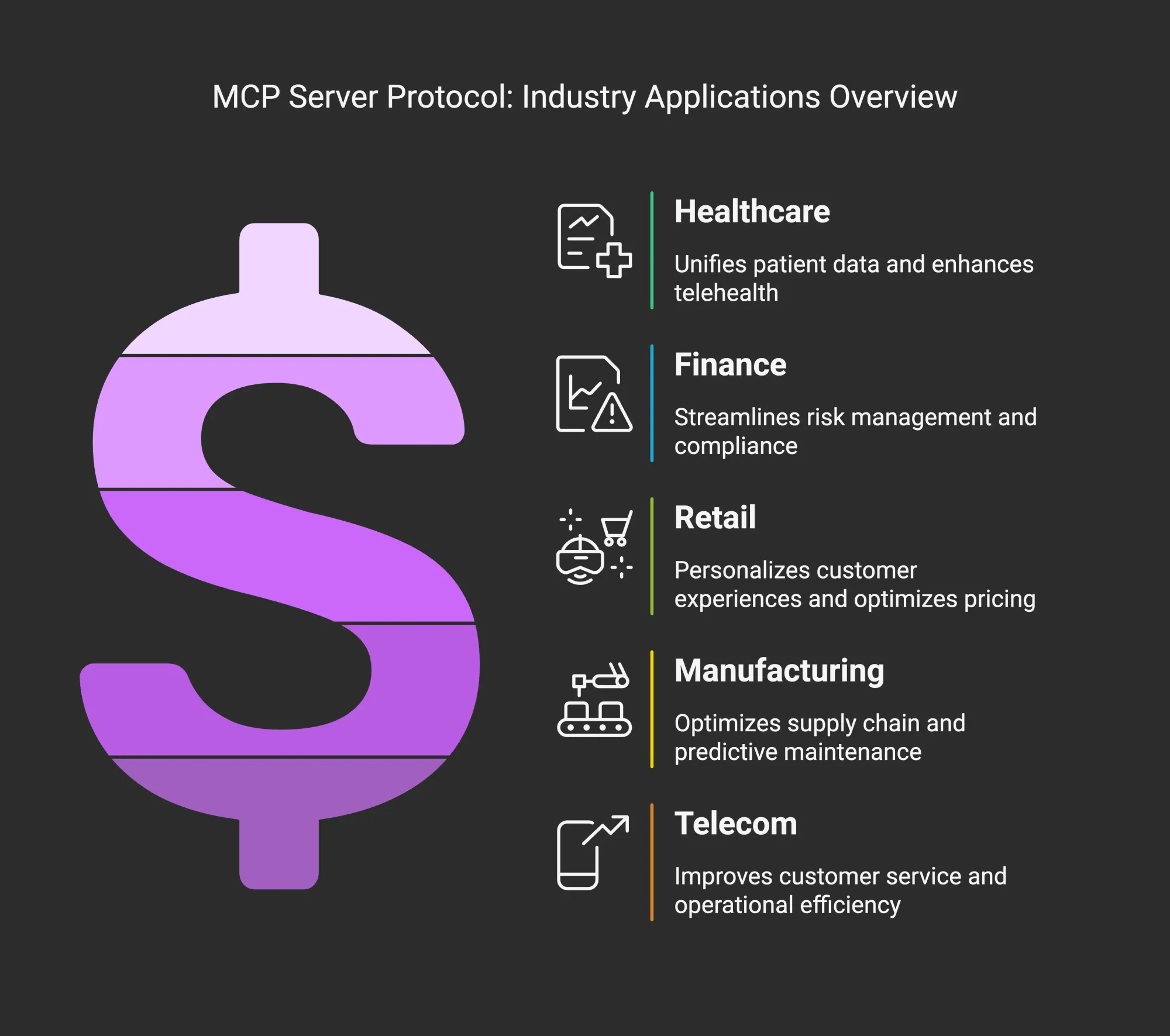 The versatility of MCP makes it valuable across diverse industries, though specific applications and benefits vary based on sector-specific needs and challenges.
Healthcare: Enhancing Telehealth and Data IntegrationIn healthcare, MCP is transforming how organizations manage and utilize medical data:
These applications are particularly valuable given healthcare’s complex regulatory environment and the critical importance of data accuracy and accessibility in patient care contexts.
Finance: Revolutionizing Model Risk Management and ComplianceFinancial institutions are leveraging MCP to enhance regulatory compliance and risk management:
These capabilities are particularly valuable in financial services, where regulatory complexity and risk management demands continue to increase.
Retail: Transforming Customer Experience and Pricing StrategiesRetailers are finding significant value in MCP’s ability to enhance customer experiences and optimize pricing:
These applications help retailers respond more effectively to rapidly changing consumer preferences and market conditions.
Manufacturing: Supply Chain Optimization and Predictive MaintenanceIn manufacturing, MCP is driving improvements in operations and maintenance:
These applications are particularly valuable in manufacturing environments, where equipment downtime and supply chain disruptions can have significant financial impacts.
Telecommunications: Customer Service Enhancement and Operational EfficiencyTelecommunications companies are leveraging MCP to improve customer experiences and operational efficiency:
These applications help telecommunications providers differentiate their offerings in an increasingly competitive market while optimizing their operational efficiency.
The MCP Ecosystem: Partners and IntegrationsA robust ecosystem is emerging around MCP, encompassing technology providers, development tools, and community initiatives that together are accelerating adoption and innovation.
Major Companies Supporting MCPSeveral prominent technology companies have embraced MCP as a standard for AI integration:
The support of these established companies lends credibility to MCP and helps drive broader adoption across the technology landscape.
Development Tool Integration: Zed, Replit, Codeium, and SourcegraphDevelopment tool providers are integrating MCP to enhance their AI-assisted coding features:
These integrations demonstrate MCP’s value in developer workflows, where contextual awareness significantly enhances AI assistance.
SDK Availability and Language SupportMCP adoption is facilitated by the availability of Software Development Kits (SDKs) in multiple programming languages:
This multi-language support ensures that organizations can implement MCP regardless of their existing technology stack, reducing barriers to adoption.
Community Initiatives and Resource SharingBeyond commercial support, a vibrant community has emerged around MCP, driving innovation and best practices:
These community initiatives accelerate MCP adoption by making knowledge and resources more accessible to developers at all levels of expertise.
Market Growth Projections: The $585.49 Million OpportunityThe market for MCP-related applications and services is projected to grow significantly in the coming years, reaching an estimated $585.49 million by 2030. This growth is driven by several factors:
This projected market growth reflects the significant value that MCP brings to organizations implementing AI solutions, as well as the broader ecosystem of developers, consultants, and service providers supporting these implementations.
Security, Privacy, and Compliance ConsiderationsAs with any technology that handles sensitive data, MCP implementation requires careful attention to security, privacy, and compliance considerations.
MCP’s Security Architecture and FeaturesMCP includes several architectural elements designed to enhance security:
These security features provide a foundation for secure MCP implementation, though organizations must still apply their own security measures based on specific requirements and risk profiles.
Data Protection Measures and Privacy-Preserving TechniquesProtecting sensitive data is a critical concern in MCP implementations:
These data protection measures help organizations balance the benefits of AI integration with their privacy obligations and commitments.
Regulatory Alignment with GDPR, CCPA, and Industry-Specific RegulationsMCP implementations must align with relevant regulatory frameworks:
Security aspects of MCP implementation require careful planning to ensure regulatory compliance while maintaining the functionality and performance benefits of MCP.
Authentication Mechanisms and Authorization ProtocolsRobust authentication and authorization are essential components of secure MCP implementation:
These security controls help ensure that only authorized users and systems can access sensitive data and functionality through MCP integrations.
Best Practices for Secure MCP DeploymentOrganizations implementing MCP should follow established security best practices:
By following these best practices, organizations can mitigate security risks while still capturing the full value of MCP’s integration capabilities.
The Future of MCP (2025 and Beyond)As MCP continues to evolve, several trends and developments are shaping its future trajectory and potential impact.
Anthropic’s Roadmap for MCP EvolutionAnthropic has outlined several key priorities for MCP’s ongoing development:
These roadmap items reflect Anthropic’s commitment to making MCP more versatile, secure, and easier to implement across diverse organizational contexts.
Forthcoming Features: Remote MCP and Enhanced Agent SupportSeveral specific features are anticipated in upcoming MCP releases:
These forthcoming features will address many of the current limitations identified by early adopters, expanding MCP’s applicability to more diverse environments and use cases.
Potential New Capabilities and Extended ApplicationsBeyond Anthropic’s official roadmap, several potential capabilities and applications are on the horizon for MCP:
These potential developments represent natural extensions of MCP’s core capabilities that could unlock new value in specific domains and use cases.
Expert Predictions on MCP’s Impact on Business AI IntegrationTechnology experts and industry analysts have made several noteworthy predictions about MCP’s future impact:
These predictions highlight the potential long-term significance of MCP beyond its immediate technical benefits, suggesting its role as a catalyst for broader changes in how organizations approach AI integration.
Integration with Emerging Technologies: Multimodal Systems and BeyondMCP’s evolution will likely intersect with other emerging technologies:
These potential integrations represent longer-term possibilities that could significantly expand MCP’s capabilities and applications as the broader technology landscape evolves.
Getting Started with MCP: A Practical GuideFor organizations looking to implement MCP, a structured approach can streamline adoption and maximize value. This section provides practical guidance for getting started with MCP implementation.
Setting Up Your First MCP ServerImplementing your first MCP server involves several key steps:
Practical applications of MCP demonstrate that starting with a focused, well-defined server implementation creates a solid foundation for future expansion.
Resources and Documentation for DevelopersDevelopers implementing MCP can leverage numerous resources:
These resources help developers overcome common challenges and accelerate their MCP implementation journey.
Best Practices for Business ImplementationBeyond technical considerations, several business implementation best practices can enhance MCP adoption success:
These business-focused practices complement technical implementation approaches to ensure that MCP adoption delivers tangible organizational value.
Measuring Success: Key Metrics for MCP ROIEvaluating MCP implementation success requires defining and tracking appropriate metrics:
These metrics provide quantifiable evidence of MCP’s value, supporting ongoing investment and expansion decisions.
Building an MCP Strategy for Your OrganizationDeveloping a comprehensive MCP strategy involves several key elements:
A well-crafted MCP strategy ensures that implementation efforts are coordinated, sustainable, and aligned with organizational priorities.
Conclusion: Why MCP Is the Future of AI IntegrationAs we’ve explored throughout this article, the Model Context Protocol represents a fundamental shift in how AI systems connect with external data sources and tools. Its significance extends far beyond its technical architecture, pointing toward a future of more capable, contextually aware, and integrated AI applications.
Summarizing the Business Case for MCP AdoptionThe business case for MCP adoption rests on several compelling pillars:
These benefits collectively create a compelling rationale for organizations to invest in MCP as a foundational element of their AI strategy.
The Competitive Imperative: Why Organizations Can’t Afford to WaitThe rapidly evolving AI landscape creates a competitive imperative around MCP adoption:
These factors create urgency around MCP adoption, particularly for organizations in competitive industries where AI capabilities increasingly drive differentiation and value creation.
Final Thoughts on the Transformative Potential of MCPBeyond its immediate business benefits, MCP carries transformative potential for the broader AI landscape:
As MCP continues to evolve and mature, its impact will likely extend beyond specific technical capabilities to reshape how we think about and interact with AI systems. Organizations that recognize and embrace this transformation early stand to benefit not only from improved operational efficiency but also from the opportunity to pioneer new approaches to value creation in the emerging AI-enhanced business landscape.
To explore how your organization can benefit from MCP implementation, check out our MCP setup guides, review detailed case studies, or see how MCP compares with traditional APIs.