

Introduction to Building AI AgentsThe arrival of OpenAI’s Responses API marks a significant shift in how developers can create AI agents. Unlike previous API iterations that required complex orchestration and prompt engineering, the Responses API provides a unified interface that drastically simplifies building sophisticated AI systems while expanding their capabilities.
This API combines the straightforward approach of the Chat Completions API with advanced functionalities like web search, file search, and computer use automation. It enables developers to create AI agents that can interact with the digital world, access up-to-date information, and perform complex tasks with minimal code.
The transformative potential of the Responses API extends beyond just technical advancement. It opens up possibilities for businesses to automate workflows, enhance customer experiences, and gain competitive advantages through AI-powered solutions previously achievable only by teams with specialized expertise.
In this guide, we’ll explore various types of AI agents you can build with the Responses API, from task automation assistants to expert advisory systems. We’ll also cover implementation approaches, best practices, and strategies for optimizing performance and security. Whether you’re looking to enhance existing applications or create entirely new AI-driven experiences, this guide will provide the insights you need.
Responses API FundamentalsBefore diving into specific agent types, it’s important to understand what makes the Responses API such a powerful foundation for AI development. At its core, the API provides a standardized way to interact with OpenAI’s language models while leveraging built-in tools that extend the models’ capabilities.
Core Capabilities and ArchitectureThe Responses API represents a significant evolution from previous OpenAI offerings. Unlike the Chat Completions API, which focuses primarily on generating text responses, the Responses API is designed specifically for building agents that can take actions and interact with external systems.
 Key architectural components include:
This architecture significantly reduces the development complexity previously associated with building AI agents, making advanced capabilities accessible to a broader range of developers.
Available Built-in ToolsWhat truly sets the Responses API apart are its built-in tools for building agents that dramatically expand what AI models can do without requiring complex custom integrations:
These tools transform what’s possible with AI agents, enabling them to access real-time data, interact with your organization’s knowledge base, and even automate tasks across computer systems.
Key Advantages Over Previous APIsThe Responses API offers several significant advantages over earlier approaches:
These advantages make building AI agents more accessible while simultaneously expanding what those agents can accomplish.
Setting Up Your Development EnvironmentTo start working with the Responses API, you’ll need:
With these fundamentals in place, you’re ready to explore the specific types of agents you can build with this platform.
Building Task Automation AgentsTask automation agents represent one of the most valuable applications of the Responses API. These agents can handle repetitive workflows, process information, and interact with digital systems to complete specific tasks with minimal human intervention.
Definition and Core Capabilities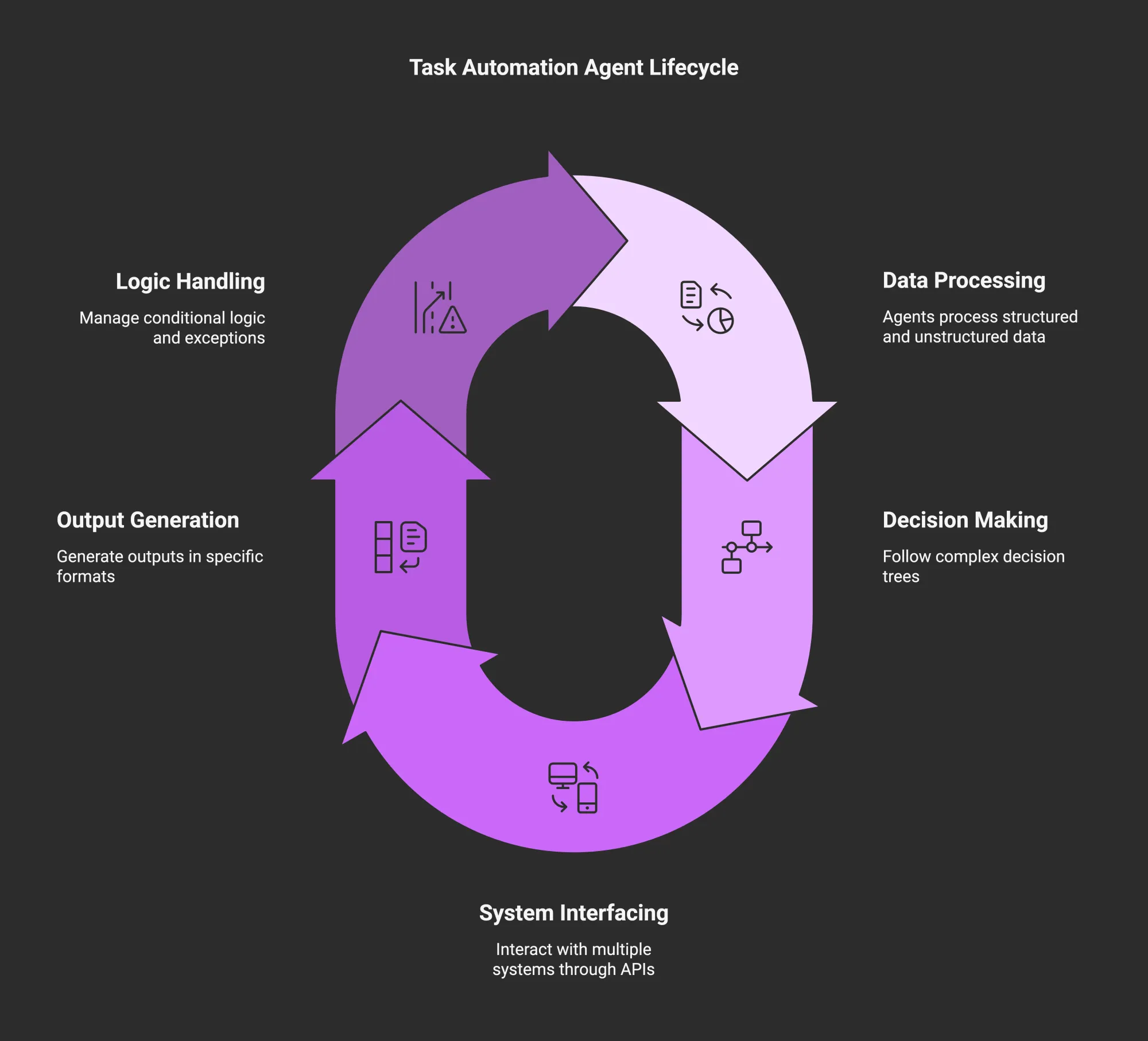 Task automation agents are AI systems designed to execute defined workflows or sequences of operations. They excel at:
What makes them particularly powerful with the Responses API is the ability to customize AI agents for specific business processes, adapting them to your organization’s unique workflows and requirements.
Real-World ApplicationsTask automation agents can transform many business operations:
These applications can significantly reduce manual effort while improving consistency and reducing error rates.
Implementation ApproachBuilding effective task automation agents requires:
Here’s a simplified example of how you might structure a task automation agent using the Responses API:
// Example code for a document processing agent
const response = await client.responses.create({
  model: "gpt-4o",
  tools: [
    { type: "file_search" },
    { type: "web_search" }
  ],
  input: `Extract the key financial figures from the Q3 report and compare them
  with industry benchmarks. Format the results as a bulleted summary.`
});
Developing Information Retrieval & Research AgentsInformation retrieval and research agents represent one of the most powerful applications of the Responses API. These agents can gather, synthesize, and present information from various sources, providing users with comprehensive answers to complex questions.
Building Information Gathering AgentsInformation retrieval agents excel at searching for, filtering, and synthesizing information from diverse sources. The Responses API makes building these agents more straightforward through its built-in web search capabilities.
These agents can:
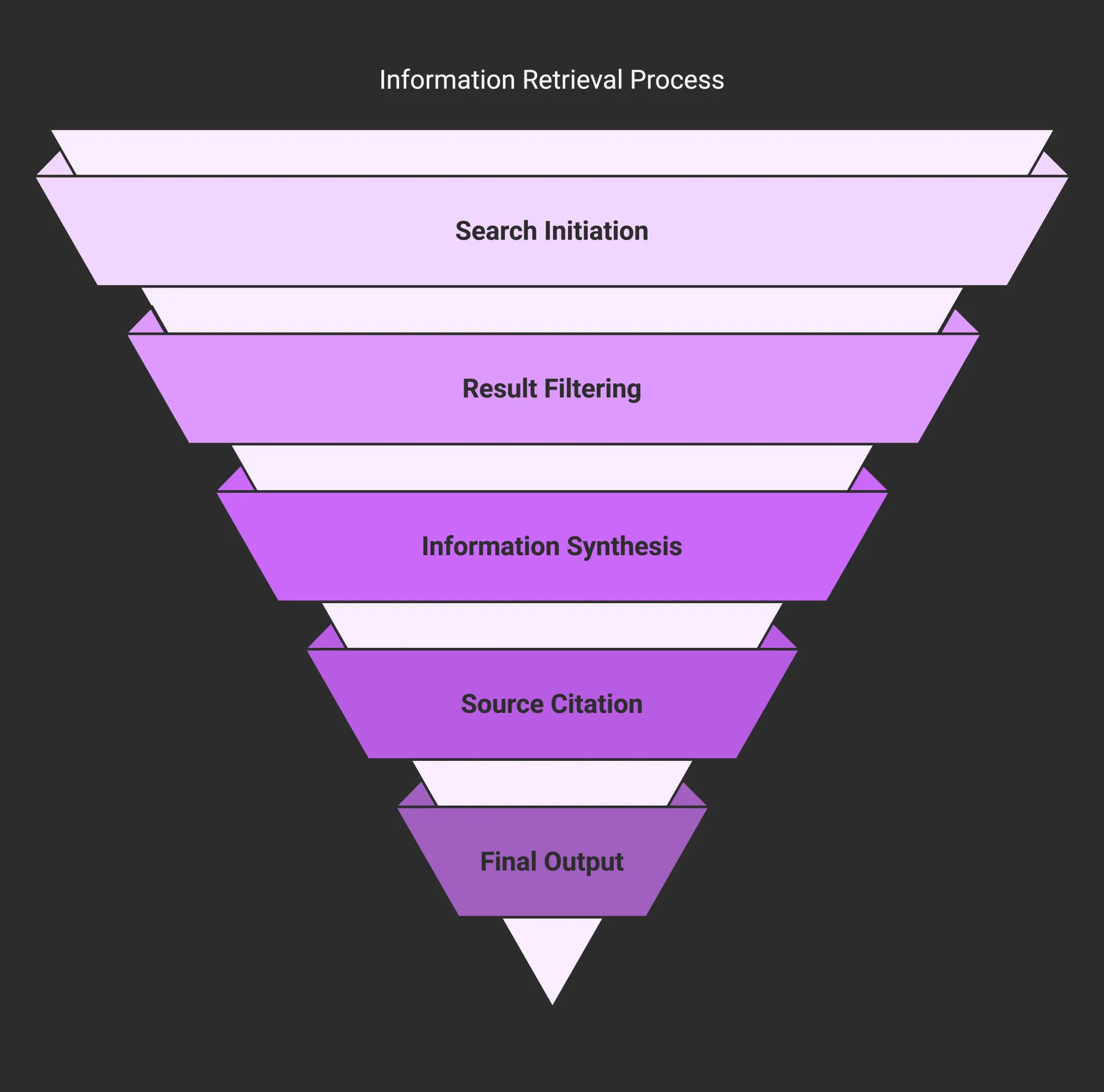 Understanding AI agent web search capabilities is crucial for developing effective information retrieval agents. Access to current information beyond training data makes them valuable for research tasks requiring real-time knowledge.
Integrating Web Search EffectivelyThe web search tool in the Responses API transforms how information retrieval agents function. Rather than being limited to static training data, agents can now:
Effective implementation involves:
Advanced Information Processing TechniquesBeyond basic search and retrieval, advanced research agents can employ sophisticated techniques for processing information:
Implementation GuideHere’s a practical example of implementing a research agent with the Responses API:
// Example of a research agent implementation
const response = await client.responses.create({
  model: "gpt-4o",
  tools: [{ type: "web_search" }],
  input: `Research the latest developments in quantum computing,
  focusing on practical applications that might emerge in the
  next 3-5 years. Provide a balanced assessment of optimistic
  and skeptical viewpoints.`
});
Customer Service & Support AgentsCustomer service and support represent one of the most high-impact applications for AI agents built with the Responses API. These agents can handle inquiries, troubleshoot issues, and provide personalized assistance at scale.
Creating Responsive Support AgentsEffective customer service agents need to be responsive, accurate, and empathetic. With the Responses API, you can create agents that:
This approach allows companies to provide 24/7 support while freeing human agents to focus on more complex interactions.
Memory Management for PersonalizationOne key aspect of effective support agents is their ability to remember context and personalize interactions. Enhancing conversational agents with effective memory management is crucial for creating context-aware support experiences.
The Responses API simplifies memory management by automatically maintaining conversation context. This can be further enhanced by implementing:
Understanding the differences between short-term and long-term memory in AI agents can help you design more effective customer service systems that maintain context appropriately.
Handling Complex Customer QueriesComplex customer queries often require multiple tools and capabilities. The Responses API excels here by allowing agents to:
For example, a customer support agent might check a product’s return policy, look up a customer’s order status, and generate a personalized response explaining options—all within a single flow.
Content Generation & Creative AgentsContent generation represents another powerful application of AI agents built with the Responses API. These agents can create various types of content—from blog posts and marketing copy to technical documentation—while leveraging real-time information and tailored guidelines.
Designing Agents for Content CreationEffective content generation agents are designed to understand specific requirements and adapt their output accordingly. They can:
The Responses API’s ability to access both web data and internal documents makes it particularly powerful for content creation that requires factual accuracy and consistency.
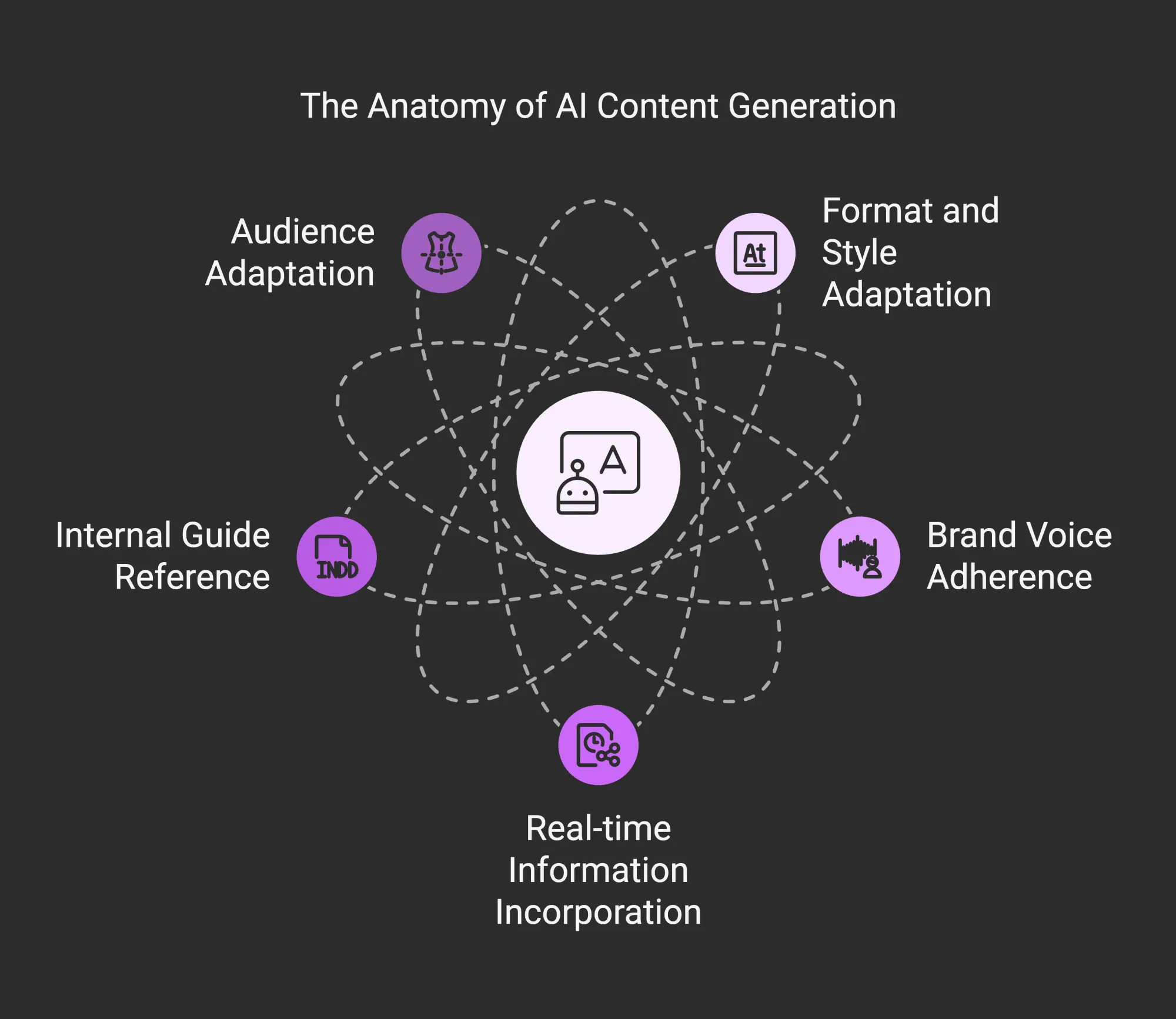 Techniques for Guiding Creative OutputCreating high-quality content requires more than just generating text—it requires guiding the creative process effectively. Key techniques include:
These methods help ensure that the generated content meets objectives while maintaining quality and originality.
Integration with Content SystemsContent generation agents become even more valuable when integrated with existing content systems. The Responses API can work with:
This allows for seamless workflows where content is generated, reviewed, and published without manual copying and pasting.
Real-World ExamplesContent generation agents can be applied across numerous scenarios:
Here’s a simplified implementation example:
// Example of a blog post generation agent
const response = await client.responses.create({
  model: "gpt-4o",
  tools: [
    { type: "web_search" },
    { type: "file_search" }
  ],
  input: `Create a comprehensive blog post about sustainable packaging
  innovations in the food industry. Include recent developments,
  industry statistics, and practical examples. The post should be
  informative but accessible to a general audience, approximately
  1200-1500 words. Follow our brand voice guidelines (accessible
  via file search) and verify all facts with web search.`
});
Expert & Advisory AI AgentsExpert system and advisory agents are some of the most sophisticated applications of the Responses API. These agents encapsulate domain-specific knowledge and decision-making capabilities to provide specialized advice in particular fields.
Building Domain-Specific Knowledge AgentsExpert systems emulate the decision-making abilities of human experts in specific domains. With the Responses API, you can create agents that:
Domain-specific AI agents: Specialized solutions for industries are increasingly valuable as organizations recognize the potential of tailored AI systems that address unique challenges.
Techniques for Improving Reasoning CapabilitiesExpert advisory agents require sophisticated reasoning to provide valuable guidance. Key techniques include:
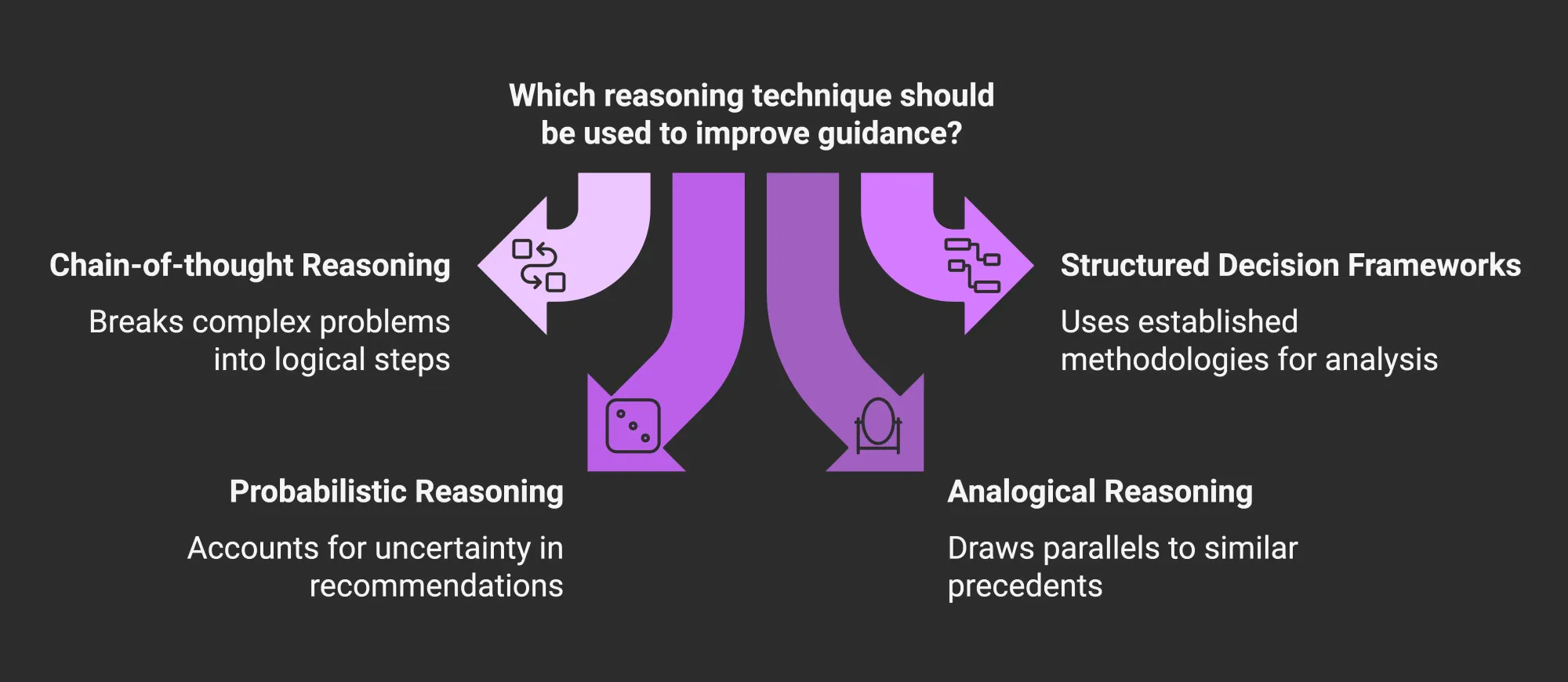 Implementing these techniques helps ensure advisory agents provide thoughtful, nuanced guidance rather than simplistic answers.
Implementing Multi-Step Decision ProcessesMany expert systems need to guide users through multi-step decisions. The Responses API facilitates this by:
This approach allows for more interactive and personalized advisory experiences.
Applications Across IndustriesExpert system agents can be applied in various sectors:
Here’s a simplified example of an expert system for investment advice:
// Example of a financial advisory agent
const response = await client.responses.create({
  model: "gpt-4o",
  tools: [
    { type: "web_search" },
    { type: "file_search" }
  ],
  input: `Based on my investment profile (risk tolerance: moderate,
  investment horizon: 15 years, current portfolio: 60% stocks,
  30% bonds, 10% cash), analyze current market conditions and
  recommend potential adjustments to my asset allocation.
  Consider recent economic indicators and provide reasoning.`
});
Multi-Agent System ArchitecturesAs AI applications grow more sophisticated, multi-agent architectures become increasingly important. These systems leverage multiple specialized agents working together to handle complex tasks that a single agent might struggle to manage effectively.
Coordinating Multiple Specialized AgentsMulti-agent systems require careful coordination to function effectively. Key approaches include:
The open-source Agents SDK provided alongside the Responses API offers valuable tools for implementing these coordination mechanisms.
Implementing Agent-to-Agent HandoffsSmooth handoffs between agents are crucial for maintaining conversation continuity and ensuring tasks are completed effectively. Effective handoffs require:
For example, a customer service system might include separate agents for initial triage, technical support, billing inquiries, and escalation—each picking up where the previous agent left off.
Managing Context Across Agent InteractionsContext management is even more critical in multi-agent systems. Strategies include:
These approaches ensure that users experience a cohesive interaction despite multiple specialized agents working behind the scenes.
Code Examples for Multi-Agent OrchestrationHere’s a simplified example of how you might implement a multi-agent system using the Responses API and Agents SDK:
// Example of a multi-agent system with handoffs
// First agent: Initial triage
const triageResponse = await client.responses.create({
  model: "gpt-4o",
  tools: [{ type: "web_search" }],
  input: userQuery,
  additional_instructions: "Determine if this is a technical issue, billing question, or general inquiry."
});

// Based on triage, route to appropriate specialized agent

if (triageResponse.content.includes("technical issue")) {

  const techSupportResponse = await client.responses.create({

    model: "gpt-4o",

    tools: [

      { type: "web_search" },

      { type: "file_search" }

    ],

    input: ${triageResponse.content}nnOriginal user query: ${userQuery},

    additional_instructions: "You are a technical support specialist. Provide detailed troubleshooting guidance."

  });

  // Return tech support response

} else if (triageResponse.content.includes("billing")) {

  // Route to billing agent with context

  // ...

}
This example demonstrates a basic handoff between a triage agent and specialized support agents, maintaining context throughout the process.
Technical Implementation Deep DiveBuilding effective AI agents requires thoughtful technical implementation. This section explores key aspects of agent development, including memory management, tool integration, error handling, and security considerations.
Memory Management StrategiesEffective memory management is critical for maintaining context and enabling personalized interactions. Key strategies include:
These memory types often work together. For instance, a customer service agent might use short-term memory for the current conversation while accessing long-term memory to personalize responses based on customer history.
Tool Integration Patterns and Best PracticesThe Responses API simplifies tool integration, but effective implementation still requires careful consideration. Best practices include:
For example, effectively combining web and file search requires understanding when to use each—web for current public information and file search for proprietary data.
Error Handling and Fallback MechanismsRobust error handling is essential for production-grade AI agents. Key strategies include:
These approaches ensure that AI agents remain useful and trustworthy even when facing unexpected situations.
Security Considerations and Compliance RequirementsSecuring AI agents with proper authentication and maintaining compliance with relevant regulations are critical aspects of implementation. Key considerations include:
Security must be a core consideration from the start. Identifying potential vulnerabilities early can help mitigate risks before they become problems.
Performance Optimization & Cost ManagementAs AI agent usage scales, performance optimization and cost management become increasingly important. Effective strategies can reduce operational expenses while maintaining or improving response quality and speed.
Token Usage Optimization TechniquesAPI costs are often based on token usage, so optimizing token usage can directly affect expenses. Token optimization for effective prompt engineering involves several key techniques:
These techniques can reduce token consumption without sacrificing output quality.
Implementing Effective Caching StrategiesOpenAI cost optimization best practices often highlight caching as critical. Effective caching approaches include:
Implementing a robust caching layer can reduce API calls substantially for applications with repetitive queries or predictable usage patterns.
Batch Processing for EfficiencyFor scenarios that don’t require immediate responses, batch processing can significantly improve efficiency and reduce costs. Strategies include:
These approaches can improve resource utilization while lowering operational costs.
Monitoring and Managing Operational CostsControlling costs when using OpenAI API requires ongoing monitoring and management. Key strategies include:
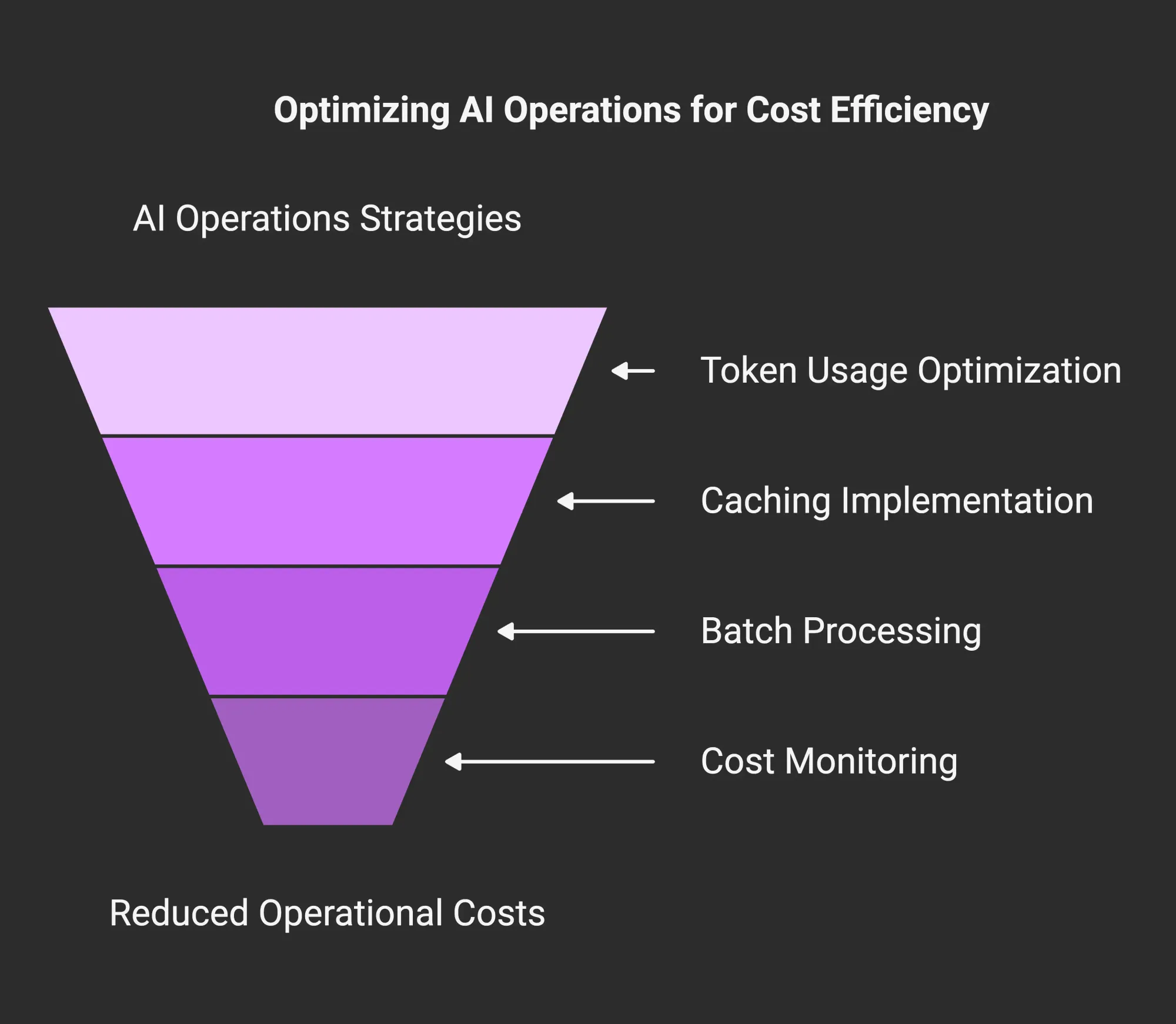 These practices enable sustainable scaling of AI agent deployments while keeping costs predictable.
Security & Ethics Best PracticesAs AI agents become more capable and integrated into critical systems, security and ethical considerations become increasingly important. Robust safeguards and ethical frameworks are essential for responsible AI deployment.
Protecting Against Prompt Injection and Other VulnerabilitiesAI agents face various security threats, with prompt injection being particularly concerning. Key protection strategies include:
These measures help protect against adversaries attempting to manipulate AI agents.
Data Privacy ConsiderationsAI agents often process sensitive information, making data privacy a critical concern. Best practices include:
These approaches protect user privacy while enabling contextually relevant experiences.
Implementing Proper Authentication and AuthorizationSecuring AI agents with proper authentication is crucial, especially for agents with access to sensitive data or capabilities. Key strategies include:
These measures help ensure AI agents are accessible only to authorized users and perform only authorized actions.
Ethical Deployment Guidelines by IndustryDifferent industries have specific ethical considerations for AI deployment:
These guidelines help ensure that AI agents are deployed responsibly and address the unique challenges of each sector.
Testing & Evaluation StrategiesComprehensive testing and evaluation are essential for developing reliable, effective AI agents. A systematic approach helps identify issues, optimize performance, and ensure agents meet user needs.
Methods for Evaluating Agent PerformanceEffective evaluation assesses multiple dimensions of performance:
These dimensions should be evaluated through automated metrics and human assessment for a complete view.
Automated Testing ApproachesAutomated testing enables consistent, scalable evaluation. Key approaches include:
Automated testing can identify issues across a broader range of scenarios than manual testing alone.
User Feedback IntegrationUser feedback provides crucial insights into real-world performance. Effective integration strategies include:
User feedback helps ensure that technical performance translates into actual user value.
Continuous Improvement TechniquesAI agent development is an iterative process that requires ongoing refinement. Key approaches include:
These techniques help ensure AI agents continue to improve over time, adapting to changing requirements.
Common Challenges & SolutionsBuilding AI agents with the Responses API involves navigating various challenges. Understanding these issues and their solutions can help you create more robust and effective agents.
Handling Context LimitationsDespite advances in model capabilities, context limitations remain a challenge for complex interactions. Common solutions include:
Understanding tokens, cost, and speed with OpenAI’s APIs is crucial for managing context effectively while balancing performance considerations.
Managing Tool Transitions EffectivelySmooth transitions between different tools are essential for complex tasks. Key strategies include:
These approaches ensure tool transitions appear seamless to users while maintaining effectiveness.
Addressing Security ConcernsAs AI agents gain more capabilities, security concerns become increasingly important. Effective measures include:
Threat modeling for Computer-Using Agents can help mitigate security risks before they become significant problems.
Troubleshooting Integration IssuesIntegration challenges are common when connecting AI agents to existing systems. Common solutions include:
These steps help ensure reliable integration and consistent agent performance.
Future Directions & Emerging PatternsThe field of AI agents is evolving rapidly, with new capabilities and methods emerging. Understanding these future directions can help you make strategic decisions about AI agent implementations.
Upcoming Developments in the Responses APIAlthough the specific roadmap may not be public, several trends suggest possible developments:
These advancements will likely expand what’s possible with AI agents while making them more accessible and flexible.
Emerging Agent Design PatternsSeveral design patterns are proving effective:
These patterns are likely to become standard in agent design as the technology matures.
Industry Trends and OpportunitiesSeveral trends are shaping the future of AI agents:
Organizations that effectively leverage these trends can create innovative products, services, and experiences.
Preparing for Future CapabilitiesTo position your projects for success as AI agent capabilities evolve, consider:
These preparations can help you capitalize on new capabilities while managing associated risks and challenges.
Conclusion & Key InsightsThe OpenAI Responses API represents a significant advancement in AI agent development, making sophisticated capabilities accessible to a broader range of developers while expanding what’s possible with AI systems. You can build various types of AI agents capable of automating tasks, retrieving and synthesizing information, supporting customers, generating content, and providing expert advice.
Key Takeaways for ImplementationAs you begin building AI agents with the Responses API, remember these principles:
These strategies will help you develop practical AI agents that deliver real value.
Getting Started with Your First AgentTo build your first agent, consider this step-by-step approach:
This incremental process allows you to gain experience and confidence while delivering tangible results.
Resources for Continued LearningTo deepen your understanding and stay updated on best practices, consider exploring:
These resources can provide ongoing guidance as you expand your AI agent implementations.
By building AI agents that are helpful, secure, and aligned with user needs, you can contribute to a future where AI technology serves humanity’s best interests. The journey is just beginning, and the opportunities are immense.